
Tata Motors on Friday said it will hike the prices of its passenger vehicles, excluding the Nano, by up to Rs 36,000 from April 1, to offset rising input costs.

Manufacturing sector activities in India moderated for the second straight month in July as rates of expansion in output and new orders eased slightly, a monthly survey said on Tuesday. The seasonally adjusted S&P Global India Manufacturing Purchasing Managers' Index (PMI) eased to 57.7 in July from 57.8 in June. Despite the fall, the Indian manufacturing sector maintained strong growth momentum at the start of the third quarter amid ongoing buoyant demand, the survey said.

A weaker-than-expected sales performance, concerns about higher competitive intensity in the current year, and earning cuts by some brokerages have weighed on the stock of the country's largest paint maker, Asian Paints. While the Q3 volume show was slightly below expectations, the company's operational and bottom line beat estimates, benefiting from the falling raw material costs. The stock ended the day with a decline of over 2 per cent at Rs 3,175 apiece.

The Gujarat Cooperative Milk Marketing Federation (GCMMF), which markets its dairy products under the Amul brand, on Tuesday increased the prices of its Gold, Taaza and Shakti milk brands by Rs 2 per litre. The new prices will be effective from Wednesday, the GCMMF said in a statement. This price hike is being done due to an increase in the overall cost of operation and production of milk, it said.

From its lows this month, the stock of Sona BLW Precision Forgings is up 10 per cent on better-than-expected results. The stock rose by 4 per cent in the trading session on Tuesday after Japan's Nikkei Group said the Indian automotive component major has topped its rankings in terms of competitive advantage. The rankings are based on sales, profit margin, capital expenditure, research and development, and market capitalisation.

Consumer-focused companies have been left with few options but to increase the prices of their products as input costs mount because of various factors, including supply chain disruptions. This has been affecting monthly household budgets. Prices of scores of items -- from spices to soaps to rice -- have increased in the past year.
Sluggish rural demand along with higher inflation is set to mute revenue growth of the fast-moving consumer goods (FMCG) sector at 7-9 per cent this fiscal and the next compared to 8.5 per cent in the previous fiscal, a report said. Almost 40 per cent of the Rs 4.7-lakh-crore sector come from the hinterland markets, which have been hit by high inflation, low wages and high job losses since the Covid pandemic. Revenue growth of the FMCG sector will be muted at 7-9 per cent this fiscal and the next compared to 8.5 per cent in the last, while volume growth will be just about 1-2 per cent, down from 2.5 per cent last fiscal, Crisil said in a report on Monday.

Manufacturing activities in India touched a three-month high in March boosted by faster expansions in new orders and output amid demand resilience and easing of cost pressures, according to a monthly survey. The seasonally adjusted S&P Global India Manufacturing Purchasing Managers' Index (PMI) rose from 55.3 in February to 56.4 in March, signalling the strongest improvement in operating conditions in 2023 so far. The March PMI data pointed to an improvement in overall operating conditions for the 21st straight month.

India's consumer price index (CPI)-based inflation could ease in the coming months thanks to the arrival of kharif crops, lower international commodity prices, and a pass through of lower input costs to consumers, the finance ministry said in its Monthly Economic Review (MER) for October, which was released on Thursday. The MER, however, warned that the global macroeconomic situation remained precarious and a recession in many advanced economies would impact India's exports. "Easing international commodity prices and new Kharif arrival are set to dampen inflationary pressures in the coming months.

Prices of all metals - from steel to copper, aluminium, zinc and lead - have shot up by about 5-11 per cent in the past month. Commodity inflation is raising its head, forcing companies to consider price hikes.

'Developers are into profit-making. And there's not too much money in the affordable segment.' 'So, they don't do affordable housing.'

Self-employed individuals often face hurdles in buying term insurance due to financial documentation that doesn't fully reflect their earnings. This complicates underwriting.

After the hit of the pandemic, India Inc is now worried about the adverse impact of inflation and higher commodity prices on their revenues and margins. The inflation scare is the strongest among manufacturers of consumer goods such as automobiles, consumer durables, and fast-moving capital goods (FMCG). Companies across sectors fear they will not be able to pass on the hike in input costs to their consumers due to weak demand, which, in turn, would lead to a hit on margins and profitability in the forthcoming quarters.

Finance Minister Nirmala Sitharaman is likely to step up efforts to boost consumption and rural economy while keeping inflation under check when she presents her sixth straight Budget on February 1. Experts said one way to boost consumption is to put more money in the hands of people, and one of the possible ways of doing it is by reducing the tax burden through tinkering with tax slabs or increasing the standard deduction. Another proposal is related to increasing the funds under the rural employment guarantee scheme MGNREGA and higher payout for farmers.

Raw material prices had been on the rise, but since Russia waged war on Ukraine, prices have surged.
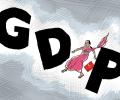
India's economy is expected to grow 7.5-8 per cent this fiscal year with exports playing a key role in the country's success story, CII president TV Narendran said on Monday. However, he said the country needs to remain prepared for any fallout of next wave of COVID-19 pandemic, and the impact of the ongoing Russia-Ukraine war. "We are confident that the economy can retain a high growth trajectory this year. "So, we are very optimistic on the export front. "Exports will be a key component of India's success story going forward," Narendran said.

Kajaria Ceramics, the country's leading listed tile manufacturer, has seen its stock fall by 7 per cent over the past month amid concerns about rising input costs and sluggish domestic demand. Other listed stocks also experienced weakness in September, although there was some recovery in October. While strong exports are expected to help stabilise domestic market prices, the surge in gas prices over the past couple of months may have impacted margins in the second half of FY24.

Sounding a note of caution, the Reserve Bank said on Friday said there is a risk of high wholesale price inflation (WPI) putting pressure on the retail inflation, albeit with a lag. In its annual report, the RBI said that the cost-push pressures from high industrial raw material prices, transportation costs and global logistics, and supply chain bottlenecks continue to impinge on core inflation. "The substantial wedge between wholesale and retail price inflation amidst a sharp rise in manufactured products' inflation poses the risk of a possible passthrough of input cost pressures to retail inflation with a lag, although slack in the economy is muting the pass-through," the central bank noted.

A 25 per cent year-on-year (Y-o-Y) increase in budget allocation towards the roads sector for FY24 has led to renewed interest among investors. However, a combination of escalating costs for Bharatmala and unseasonal rains to some extent have impacted progress. Bharatmala's cost has nearly doubled from Rs 5.35 trillion to Rs 10.6 trillion and the finance ministry has asked MoRTH to go slow until Cabinet approval is received.

'Trump's disregard for norms and institutions could prove very costly for America's social fabric.'

Hyundai Motor India will raise prices of its entire product portfolio in the range of Rs 5,000 to Rs 25,000 from Jan 2015.

Spiralling prices pinched the pocket of consumer as edible oil, fuel and many other commodities turned dearer this year amid pandemic-induced disruptions but the inflationary pressure is anticipated to ease, though marginally, in the coming months. As consumers, at retail as well as wholesale levels, are willy-nilly learning to live with the new normal of curbs to contain the spread of coronavirus infections, experts are of the view that elevated inflation is likely to stay longer. After dealing with the devastating blows from the second COVID wave, especially during the April-June period, the economy is well on the revival path but the emergence of Omicron might unsettle the recovery trajectory in the short term.

Gujarat Cooperative Milk Marketing Federation (GCMMF), which markets milk and other dairy products under the Amul brand, will hike milk prices by Rs 2 per litre across India from July 1 due to an increase in input costs. The increase of Rs 2 per litre translates into a four per cent hike in MRP (Maximum Retail Price) which is much lower than average food inflation, GCMMF said in a statement on Wednesday. "We have increased Amul milk prices by Rs 2 per litre across all markets.

Japanese auto major Toyota will hike prices of its vehicles across all models in India by up to 3 per cent from January to offset rising input costs.

Farmer Ishwar Gaykar (36), from Pachghar village in Junnar tehsil of Pune district, had faced a difficult decision of dumping a large quantity of harvested tomatoes in May this year due to low prices.

TVS Motor Company, on Wednesday, overtook Hero MotoCorp in terms of market value to become the sixth-largest automobile company on market capitalisation. he former's m-cap now stands at Rs 51,681 crore to the latter's Rs 50,951 crore. Bajaj Auto, with Rs 104,872 crore, is the only two-wheeler manufacturer in the top five. Shares of TVS have rallied 73 per cent this year while shares of Bajaj and Hero have risen only 3 per cent and 10 per cent, respectively. While sales, net profit and market share of TVS are lower than that of Bajaj and Hero, there are multiple triggers for the company.

Irregular rainfall and a pick-up in commodity costs are expected to weigh on the demand and margins of fast-moving consumer goods (FMCG) companies. Most companies reported a sharp expansion in gross margins in the April-June quarter (first quarter, or Q1) of 2023-24 (FY24), given the lower prices of key raw materials and earlier price hikes. Furthermore, there were expectations that cost savings being passed on could reflect in volume growth going forward. However, these hopes could be dashed if demand recovery, especially in the rural segment, stalls, and gains on the raw material front start to recede.

Mobile phones and TV sets manufactured in India would become cheaper with Finance Minister Nirmala Sitharaman announcing cuts in Basic Customs Duty (BCD) on import of their components but smokers would have to pay more as the government has increased taxes.

The services sector growth in India fell to a one-year low in November on softer expansions in new work intakes and output, despite receding price pressures, a monthly survey said on Tuesday. The seasonally adjusted S&P Global India Services Business Activity Index fell from 58.4 in October to a one-year low of 56.9 in November. Despite witnessing a month-on-month decline, the rate of expansion was stronger than its long-run average.

Domestic air passenger traffic touched 1.25 crore in January this year, an increase of 96 per cent compared to the year-ago period, according to rating agency Icra. However, it said the traffic remained around 2 per cent lower compared to the pre-Covid levels -- January 2020. The traffic stood at 64 lakh in January last year. Icra is maintaining a negative outlook on the Indian aviation industry, reflecting the view that the financial performance of Indian airlines is likely to remain under pressure in the near term, even though the recovery in domestic passenger traffic has been healthy.

Higher inflation has again become a matter of concern for fast-moving consumer goods (FMCG) companies. After prices of commodities like sugar and wheat moved higher and stabilised at those levels, the crude oil too surged, adding to FMCG firms' worries. Besides, a dry spell in August in the ongoing monsoon season impacted rural demand.

Wholesale price-based inflation rate fell to a 3-year low of (-) 3.48 per cent in May on easing prices of food, fuel and manufactured items, strengthening the case for continuing with the pause in rate hike in the coming months of the current fiscal. This is the second straight month when WPI has been in the negative zone mainly on account of a higher base and falling prices of fuel and manufactured goods. Food prices also eased during May. In May, 2022 WPI inflation was at 16.63 per cent. Last month, it was (-) 0.92 per cent.

The company is finding it extremely difficult to absorb increasing input costs, especially steel.

As many as 37 per cent of smartphones sold in India in 2022 cost Rs 15,000 or more.

India's manufacturing sector activities witnessed the strongest rate of growth in three months in July amid improved demand conditions and easing of some local COVID-19 restrictions, a monthly survey said on Monday. The seasonally adjusted IHS Markit India Manufacturing Purchasing Managers' Index (PMI) rose from 48.1 in June to 55.3 in July, pointing to the strongest rate of growth in three months. In PMI parlance, a print above 50 means expansion while a score below 50 denotes contraction.

Iron ore mining major NMDC's results for the April-June quarter (Q1) of FY25 were better than estimates. Weak volumes were balanced off by higher realisations, better average selling price (ASP) and lower royalties which boosted bottomline. The revenue was in line with estimates at Rs 5,400 crore, flat year-on-year (Y-o-Y) and down 17 per cent quarter-on-quarter (Q-o-Q).

The prices of the company's vehicles start at Rs 2,85,000 for Spark and go up to Rs 24.6 lakh or Rs 2.46 million (ex-showroom Delhi) for the Captiva.

'The risk is in not being invested and missing out on an upmove.'

Coal India Limited's (CIL) October-December quarter of financial year 2023-24 (Q3FY24) results have beaten the Street's estimates. Revenue rose 3 per cent year-on-year (Y-o-Y) to Rs 36,200 crore, led by higher volumes and better realisation from Fuel-Supply Agreement (FSA) coal. The blended average selling price (ASP) was down 6 per cent Y-o-Y to Rs 1,727 per tonne, and the FSA ASP was up 3 per cent Y-o-Y to Rs 1,532 per tonne.

Petrol and diesel prices were cut by Rs 2 per litre each as state-owned oil companies ended a nearly two-year-long hiatus in rate revision, just hours before the general election schedule was announced.
